
Your monocultured desert
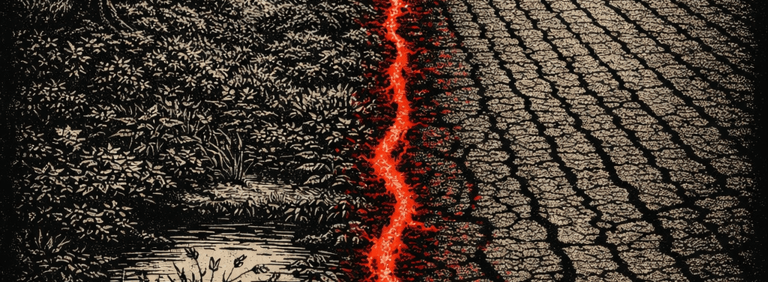
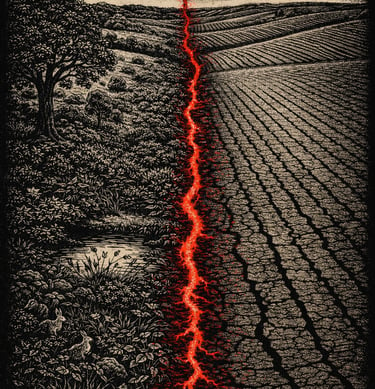
Plants don’t bleed on your plate, so you call this the “clean” part of your diet. The reality is that what feeds you still forces into existence monocultured deserts; fields kept bare and hostile by tillage, sprays, and harvests that erase countless small lives so your food stays cheap, uniform, and endless.
Vegetables
To keep your vegetables habit going (excluding potatoes), you effectively keep about ~20 m² of cropland in production every year—small compared to animal feed land, but worked hard: frequent passes, short rotations, and (often) heavy spray regimes. Over an 80-year life that’s ~4,172 kg of vegetables, and the body-count isn’t “animals you eat” (there aren’t any here). It’s the field system: soil disturbance that shreds what lives in the ground, and pesticides that kill target pests and everything nearby that shares the chemistry.
Fortunately, the death count associated with vegetable consumption is relatively small. We're talking around about ~165,000 deaths, or about 40 kg of life largely comprised of earthworms. For each 1 kg bag of vegetables you consume, you need to take that down with two teaspoons of worm-and-bug mince.
Death toll attributable to your consumption of vegetables:
~9,000 insects (mechanical, ≥1 mm share only) — Mulched in cultivation; bodies broken by blades and rollers.
Insects (pesticides, ≥1 mm share only):
~19,000 flies & midges — Drift and residues kill; damp margins become sterile strips.
~14,000 moths & caterpillars — Host plants sprayed/removed; larvae die mid-transformation.
~8,000 beetles — Soil disturbed and poisoned; crushed or neurologically shut down.
~3,000 ants & colony insects — Nests collapsed by disturbance; colonies fail underground.
~2,000 pollinators & “beneficials” — Collateral kills; caught in broad-spectrum chemistry.
~500 aquatic emergent insects — Ditches/edges degraded; adults die without breeding.
~11,000 other insects — Nymphs and larvae erased as “pests” or collateral.
Invertebrates (mechanical, ≥1 mm share only):
~39,000 earthworms — Split by cultivation; exposed; die or are eaten alive.
~30,000 springtails — Habitat reset; desiccation follows repeated disturbance.
~9,000 mites — Soil structure collapsed; micro-refugia destroyed.
~4,000 spiders — Cover removed; prey collapses; margins become dead zones.
~700 snails & slugs — Crushed or bait-killed; dehydration finishes survivors.
~500 millipedes & centipedes — Burrows destroyed; bodies shredded in soil disturbance.
~800 other macro-invertebrates — Grubs and predators erased as “field operations.”
Invertebrates (pesticides, ≥1 mm share only):
~2,500 earthworms — Sublethal poisoning weakens them; many die, soil thins.
~2,500 springtails — Residues disrupt feeding; populations crash.
~2,000 mites — Residues disrupt metabolism; populations fail in treated soil.
~2,000 spiders — Secondary poisoning through prey; nervous systems fail.
~2,000 snails & slugs — Baits/residues kill; movement fails; dehydration follows.
~750 millipedes & centipedes — Contact and residue exposure; recovery stalls.
~750 woodlice & isopods — Residue exposure + habitat loss; die-off in treated strips.
~2,000 other macro-invertebrates — Larvae and soil predators die after residue exposure.
Including insects and invertebrates in the 0.1 mm to 1 mm size range, would add 1,750,000 lives, mostly comprised of mites and springtails.
Fruit
To sustain a fruit habit, you effectively keep about ~26.7 m² of fruit-growing land in production every year—mostly orchard/vine systems (less whole-field soil inversion), but typically spray-intensive (fungicides/insecticides), especially across imported supply chains. Over 80 years that adds up to ~4,000 kg of fruit, and the deaths are overwhelmingly invertebrates: a small mechanical toll from management and harvest, and a much larger pesticide toll that kills target pests and non-target field life. Total deaths are in the region of 95,000 insects and invertebrates, the equivalent of a raisin worth with each apple.
Death toll attributable to your lifetime consumption of Fruit:
~7,000 insects (mechanical, ≥1 mm share only): — Mulched in maintenance and harvest; bodies broken in field operations.
Insects (pesticides, ≥1 mm share only):
~18,000 flies & midges — Spray drift kills; damp edges turn into sterile strips.
~13,000 moths & caterpillars — Leaves sprayed; larvae die mid-transformation on poisoned foliage.
~7,000 beetles — Ground disturbed and treated; crushed or neurologically shut down.
~3,000 ants & colony insects — Nest sites disturbed; colonies fail after repeated chemical pressure.
~2,000 pollinators & “beneficials” — Collateral kills; hit by insecticides meant for “pests.”
~600 aquatic emergent insects — Drainage edges degraded; adults die without breeding.
~11,000 other insects — Nymphs and larvae erased as “pests” or collateral.
Other invertebrates (mechanical, ≥1 mm share only):
~6,000 earthworms — Split by disturbance; exposed to sun; die or are eaten alive.
~6,000 springtails — Habitat reset; desiccation follows repeated disturbance.
~2,500 spiders — Cover removed; prey collapses; margins become dead zones.
~300 snails & slugs — Crushed or desiccated on exposed soil and bare strips.
~100 millipedes & centipedes — Burrows destroyed; bodies shredded in ground disturbance.
~400 other macro-invertebrates — Grubs and predators erased as “orchard operations.”
Other invertebrates (pesticides, ≥1 mm share only):
~2,500 earthworms — Sublethal poisoning weakens them; many die, soil thins.
~2,000 springtails — Residues disrupt feeding; populations crash in treated soil.
~1,800 mites — Contact + prey-mediated toxicity.
~2,000 spiders — Secondary poisoning through prey; nervous systems fail.
~2,000 snails & slugs — Baits/residues kill; movement fails; dehydration follows.
~700 millipedes & centipedes — Residue exposure in litter/soil interface.
~600 woodlice & isopods — Contact toxicity in damp refugia.
~2,000 other macro-invertebrates — Larvae and soil predators die after residue exposure.
Including insects and invertebrates in the 0.1 mm to 1 mm size range, would add 420,000 lives, mostly comprised of mites and springtails.
Bread
To sustain your bread habit, you effectively keep about ~29 m² of arable wheat cropland in production every year; a small area, but worked brutally: soil opened, drilled, sprayed, then harvested by heavy machinery. Over 80 years that bread translates to ~1,745 kg of wheat grain-equivalent, and the deaths don’t come from “eating animals”, they come from the field itself: mechanical disturbance (tillage/traffic/harvest) plus on-field pesticide mortality. By consuming bread, you are responsible for around ~115,000 early incidental field deaths; the equivalent a pea-sized smear of wet, crushed filed life on each slice of bread.
Here's a breakdown of the death toll associated with your consumption of bread:
~7,000 insects (mechanical, ≥1 mm share only): — Mulched during cultivation; bodies broken by blades and rollers.
Insects (pesticides, ≥1 mm share only):
~13,000 flies & midges — Drift and residues kill; damp margins turn into sterile strips.
~10,000 moths & caterpillars — Host plants sprayed/removed; larvae die mid-transformation.
~5,000 beetles — Soil disturbed and poisoned; crushed or neurologically shut down.
~3,000 ants & colony insects — Nests collapsed by disturbance; colonies fail underground.
~1,500 pollinators & “beneficials” — Collateral kills; hit by broad-spectrum chemistry and drift.
~500 aquatic emergent insects — Ditches/edges degraded; adults die without breeding.
~8,000 other insects — Nymphs and larvae erased as “pests” or collateral.
Invertebrates (mechanical, ≥1 mm share only):
~26,000 earthworms — Split by cultivation; exposed to sun; die or are eaten alive.
~19,000 springtails — Habitat reset; moisture loss follows disturbance
~6,000 mites — Soil structure destroyed; bodies crushed in the worked layer
~3,000 spiders — Cover removed; crushed in passes; prey web collapses.
~500 snails & slugs — Crushed, bait-killed, or desiccated on exposed soil.
~300 millipedes & centipedes — Burrows destroyed; bodies shredded in soil disturbance.
~500 woodlice & isopods — Refugia stripped; crushed or dried out after cover loss.
~600 other macro-invertebrates — Grubs and predators erased as “field operations.”
Invertebrates (pesticides, ≥1 mm share only):
~2,000 earthworms — Sublethal poisoning weakens them; many die, soil thins.
~2,000 springtails — Residues disrupt feeding and moulting; populations crash.
~2,000 mites — Residues disrupt feeding; treated soil becomes hostile.
~2,000 spiders — Secondary poisoning through prey; nervous systems fail.
~1,500 snails & slugs — Baits/residues kill; movement fails; dehydration follows.
~500 millipedes & centipedes — Residue exposure; slow failure after contact.
~500 woodlice & isopods — Contact toxicity; reduced feeding and die-off.
~2,000 other macro-invertebrates — Larvae and soil predators die after residue exposure.
Including insects and invertebrates in the 0.1 mm to 1 mm size range, would add 1,170,000 lives, mostly comprised of mites and springtails.
Potatoes
Potatoes feel like “simple food,” but they’re one of the most violent things we do to soil. To supply your 2,288kg lifetime potato habit, thankfully you keep only about ~6.35 m² of cropland in production every year. A small footprint, but potatoes don’t sit on land, they get ripped out of it. The ground is worked deep, ridged, sometimes stone-separated, then the crop is chemically desiccated and mechanically lifted through tonnes of soil. In other words: this isn’t “arable”; it’s excavation, repeated, and it turns the soil community into a casualty layer. Over your lifetime, this leads to around 65,000 deaths. The equivalent of swallowing a teaspoon of minced insect with each kilogram of potatoes roasted. Bitter.
Death toll attributable to Potatoes:
~4,000 insects (mechanical, ≥1 mm share only): Shredded in deep cultivation and aggressive lifting through soil.
Insects (pesticides, ≥1 mm share only):
~6,000 flies & midges — Drift and residues sterilise damp ridges and field margins.
~4,000 moths & caterpillars — Foliage treated; larvae die mid-growth.
~2,000 beetles — Ground disturbed and treated; crushed or neurologically shut down.
~1,000 ants & colony insects — Nest networks collapse after disturbance and chemical pressure.
~600 pollinators & “beneficials” — Collateral kills; hit by sprays aimed at blight protection.
~200 aquatic emergent insects — Ditches/edges degraded; breeding windows close.
~4,000 other insects — Nymphs and larvae erased and never counted.
Other invertebrates (mechanical, ≥1 mm share only):
~18,000 earthworms — Split by deep cultivation; hauled into light; die exposed.
~14,000 springtails — Habitat reset; moisture lost; die off in drying soil.
~4,000 mites — Larger-bodied share only; knocked back by disturbance.
~2,000 spiders — Cover removed; crushed in passes; starvation after prey collapse.
~300 snails & slugs — Crushed or desiccated on exposed ridges.
~200 millipedes & centipedes — Burrows destroyed; bodies shredded in disturbance.
~700 other macro-invertebrates — Grubs and soil animals erased as “operations.”
Other invertebrates (pesticides, ≥1 mm share only):
~800 earthworms — Weakened by toxins; many die, soil thins.
~700 springtails — Residue-linked die-back.
~600 mites — Populations crash after residue exposure.
~800 spiders — Secondary poisoning through prey.
~700 snails & slugs — Impaired movement; dehydration/exposure finishes them.
~200 millipedes & centipedes — Residue-linked losses.
~900 other macro-invertebrates — Larvae and predators die after residue exposure.
Including insects and invertebrates in the 0.1 mm to 1 mm size range, would add 750,000 lives, mostly comprised of mites and springtails.
Waste Food
Food waste isn’t neutral. When you buy calories you don’t eat, you don’t just throw away “money” — you order extra fields into existence, so more land gets tilled, sprayed, mown, and harvested for nothing. Using a UK-typical avoidable-waste uplift, that’s about ~307 m² of extra cropland every year grown purely to become waste. That's roughly two tennis court’s worth of farmland kept running for your bin; land that is worked, sprayed, and harvested for food you didn’t eat; nearly 1,000,000 lives cut short.
Breakdown of incidental death count that goes straight into your bin because of your incompetence:
~6 small mammals — field mice, shrews killed during harvest/tillage of extra acreage.
~1 wild bird — nests/cover lost; predation/starvation finishes the survivors.
Insects & invertebrates:
~155,000 flies & midges — knocked down by sprays and edge-zone collapse.
~115,000 moths & caterpillars — larvae die mid-cycle when foliage is treated/removed.
~67,000 beetles — disturbed, poisoned, or crushed in field operations.
~27,000 ants & colony insects — nest networks disrupted; colonies fail.
~14,000 pollinators & “beneficials” — collateral inside the blast radius.
~5,000 aquatic emergent insects — ditch/edge systems degraded; breeding windows close.
~95,000 other insects — the remainder bucket erased as background cost.
Soil and margin invertebrates (≥1 mm only):
~205,000 earthworms — cut, exposed, weakened, lost as soil is repeatedly reset.
~150,000 springtails — soil surface communities repeatedly knocked back.
~54,000 mites — churned and residues-stressed.
~39,000 spiders — cover stripped; prey webs collapse; secondary exposure finishes many.
~21,000 snails & slugs — crushed, poisoned, or desiccated on exposed ground.
~8,000 millipedes & centipedes — burrows destroyed; bodies shredded in disturbance.
~9,000 woodlice & isopods — moisture refugia stripped away.
~10,000 beetle larvae & grubs — pupation sites destroyed; chopped/buried.
~11,000 other macro-invertebrates — larvae, predators, soil animals erased as “operations.”.
Including insects and invertebrates in the 0.1 mm to 1 mm size range, would add ~8,500,000 lives, mostly comprised of mites and springtails.