~280,000 flies & midges die. Soft bodies meet hard speed.
~77,000 beetles die. Armour outside, pulp inside.
~51,000 moths & butterflies die. Wings turned to dust on impact.
~49,000 true bugs die; leaf-dwellers caught mid-air and cut short.
~24,000 wasps/bees/ant alates die—pollinators and dispersers erased before they land.
~23,000 other insects die—the rest of the aerial world reduced to smear.
~12 fish die—chronic toxicity and occasional acute events, averaged out.
~120,000 aquatic invertebrates die—larvae and small bodies that take the hit first where pollution enters water.
Including animals in the 0.1–1 mm size range would add ~3,000,000 lives. Mostly tiny airborne insects (micro-gnats / midges, aphids, thrips, very small wasps) struck by vehicles, plus aquatic meiofauna (free-living nematodes and tiny copepods / ostracods) in roadside ditches and stream sediments affected by runoff.
Transportation
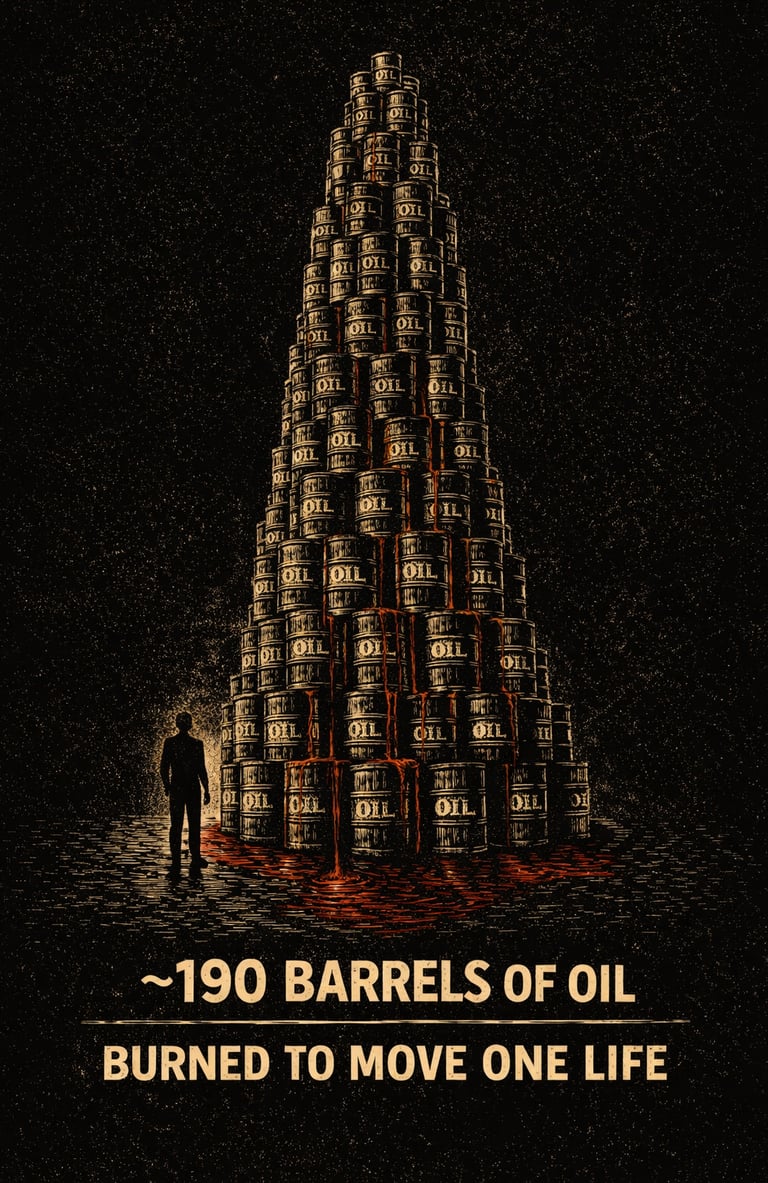
Think back to the last time you drove somewhere without thinking—just rolling forward while the world slid past your windows—and now imagine that as a lifetime habit: ~200,000 miles on the road, thousands of hours spent moving fast enough that anything in your path becomes “nothing” before your brain can register it; and to do it you burn ~30,000 litres of petrol/diesel; about ~190 barrels of oil pulled from the ground, transported, refined, shipped, stored, and pumped, a supply chain that leaks even on “normal” days through spills, discharges, and chronic contamination, and occasionally turns whole shorelines into blackened death.
Your death tally continues:
~9 birds die on roads; low flight, headlights, impact, silence.
~2 amphibians die on roads — small wet lives flattened on warm tarmac.
~1 reptile dies on roads — a sun-basking body turned into tyre-marked nothing
~1 fish dies downstream of transport—runoff and spills feeding oxygen collapse in ditches, streams, and estuaries.